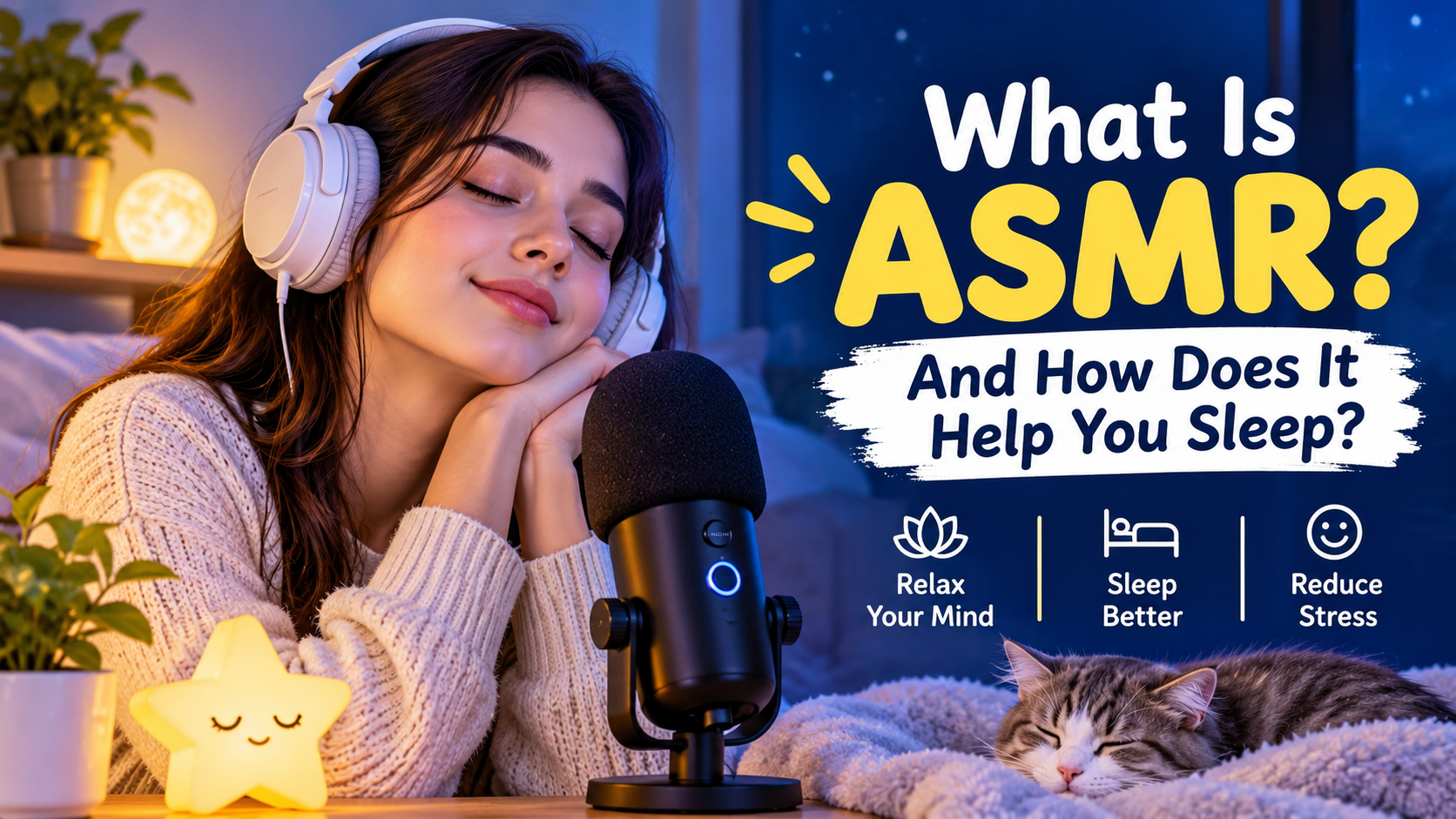
Have you ever listened to gentle whispers, soft tapping, or the sound of rain and suddenly fell calm and relaxed? If so, you may have experienced something called ASMR.
ASMR has become increasingly popular among people looking for ways to relax, reduce everyday stress, and create a peaceful bedtime routine. Millions of people enjoy ASMR videos and audio recordings, especially before going to sleep.
But what exactly is ASMR, and can it really help you sleep better?
In this guide, we’ll explore what ASMR means, how it works, popular ASMR triggers, and how you can use relaxing sounds as part of your nighttime routine.
What Is ASMR?
ASMR stands for Autonomous Sensory Meridian Response.
It describes a pleasant tingling sensation that some people experience in response to specific sounds, visuals, or gentle personal attention.
This sensation often begins around the scalp or back of the neck and may spread down the shoulders and upper body.
People commonly experience ASMR when listening to:
- Soft whispering
- Gentle tapping
- Page turning
- Hair brushing sounds
- Slow hand movements
- Personal attention roleplays
- Rain and nature sounds
Not everyone experiences ASMR tingles. However, many people enjoy ASMR content simply because it creates a relaxing atmosphere.
How Does ASMR Work?
Scientists are still studying exactly how ASMR works.
Research suggests that people who experience ASMR may feel relaxed and emotionally comfortable when exposed to certain sounds and visual triggers.
Some people describe the experience as similar to receiving a gentle massage or listening to someone speak in a soothing voice.
ASMR experiences vary from person to person. A sound that feels relaxing to one listener might not have the same effect on someone else.
Can ASMR Help You Sleep?
Many people listen to ASMR before bedtime because they find it calming.
Although ASMR is not a proven treatment for insomnia or other sleep disorders, it may help some people create a more relaxing environment before sleeping.
Here are a few reasons people enjoy ASMR at night.
1. Helps You Relax
Soft whispers, gentle tapping, and repetitive sounds can create a peaceful atmosphere.
Listening to relaxing audio may help you transition from a busy day to a quieter nighttime routine.
2. Creates a Calming Bedtime Environment
Background sounds can make your bedroom feel more peaceful.
For example, rain sounds, ocean waves, and soft ambient noise may help create a comfortable atmosphere while preparing for sleep.
3. Provides Something Relaxing to Focus On
Sometimes, people find it difficult to stop thinking about daily responsibilities when they go to bed.
Listening to gentle ASMR sounds can provide a calming point of focus instead of concentrating on everyday distractions.
4. Supports a Consistent Nighttime Routine
Listening to the same relaxing sounds each night can become part of a regular bedtime routine.
Over time, this routine may help you associate certain sounds with relaxation and bedtime.
7 Best ASMR Triggers to Try for Sleep
If you’re new to ASMR, experimenting with different sounds can help you discover what you enjoy most.
1. Whispering ASMR
Soft whispering is one of the most recognizable ASMR triggers.
Many people enjoy gentle conversations, quiet storytelling, and whispered words because they create an intimate and peaceful listening experience.
2. Rain Sounds
The gentle sound of rainfall can create a cozy atmosphere.
Rain recordings are especially popular among people who enjoy natural background sounds while relaxing.
3. Gentle Tapping
Tapping on wooden objects, glass containers, or other surfaces creates repetitive sounds.
Some listeners find these sounds satisfying and calming.
4. Hair Brushing
Slow hair-brushing sounds are another popular ASMR trigger.
The gentle brushing and repetitive movements can create a soothing listening experience.
5. Ocean Waves
Ocean waves produce a rhythmic sound that many people associate with peaceful environments.
Listening to ocean recordings may help create a relaxing bedtime atmosphere.
6. Page Turning
The soft sound of turning book pages is a favorite among some ASMR listeners.
It is simple, repetitive, and often associated with quiet reading environments.
7. White Noise
White noise contains sound energy across a broad range of frequencies.
Some people use white noise to mask distracting background sounds while sleeping.
How to Use ASMR Before Bed
You don’t need expensive equipment to start enjoying ASMR.
Follow these simple steps:
- Choose a quiet and comfortable place to relax.
- Find an ASMR recording that you enjoy.
- Keep the volume at a comfortable level.
- Put your phone aside and avoid unnecessary screen time.
- Relax your body and listen without forcing yourself to fall asleep.
You can experiment with different ASMR sounds until you discover which ones you enjoy most.
If you use headphones, choose comfortable ones and keep the volume low. Avoid sleeping with uncomfortable earbuds or headphones that could cause discomfort.
Is It Safe to Listen to ASMR Every Night?
For most people, listening to ASMR at a comfortable volume is generally considered a low-risk relaxation activity.
However, there are a few things to remember:
- Keep your audio volume at a safe level.
- Avoid uncomfortable headphones while sleeping.
- Stop listening if a particular sound causes irritation or discomfort.
- Don’t use ASMR as a replacement for medical treatment.
- Speak with a healthcare professional if persistent sleep problems affect your daily life.
ASMR vs. White Noise: What’s the Difference?
ASMR and white noise are different types of audio experiences.
ASMR focuses on specific sounds and triggers that may produce relaxing sensations in some listeners.
White noise is a consistent sound containing a broad range of frequencies, often used to mask environmental noise.
Some people prefer ASMR for its variety and personal attention sounds, while others prefer white noise because of its consistency.
There is no single best option for everyone. Try both and see which works better for your preferences.
Final Thoughts
ASMR is an interesting sensory experience that has become a popular way to relax and unwind.
From soft whispering and gentle tapping to rainfall and ocean waves, there are many sounds to explore.
Although ASMR is not a guaranteed solution for sleep problems, it may help some people create a peaceful nighttime routine.
The best approach is to experiment with different sounds, maintain healthy sleep habits, and discover what helps you feel most comfortable.
At ASMR Sleeps, our goal is to help you explore relaxing sounds, understand ASMR, and discover simple ways to make your bedtime routine more peaceful.